
For a few hours last week, the United States considered behaving like Russia.
President Trump said he supported restricting diesel exports. Politico reported the White House was preparing a 90-day ban. Within hours of that reporting, a White House official denied it, and Energy Secretary Chris Wright called the idea a “blunt tool.” Then on Friday, after G7 allies agreed to release 100 million barrels of emergency stocks and pledged to avoid export restrictions among themselves, Trump said a ban was off. But the idea isn’t dead, and neither is the pressure behind it.
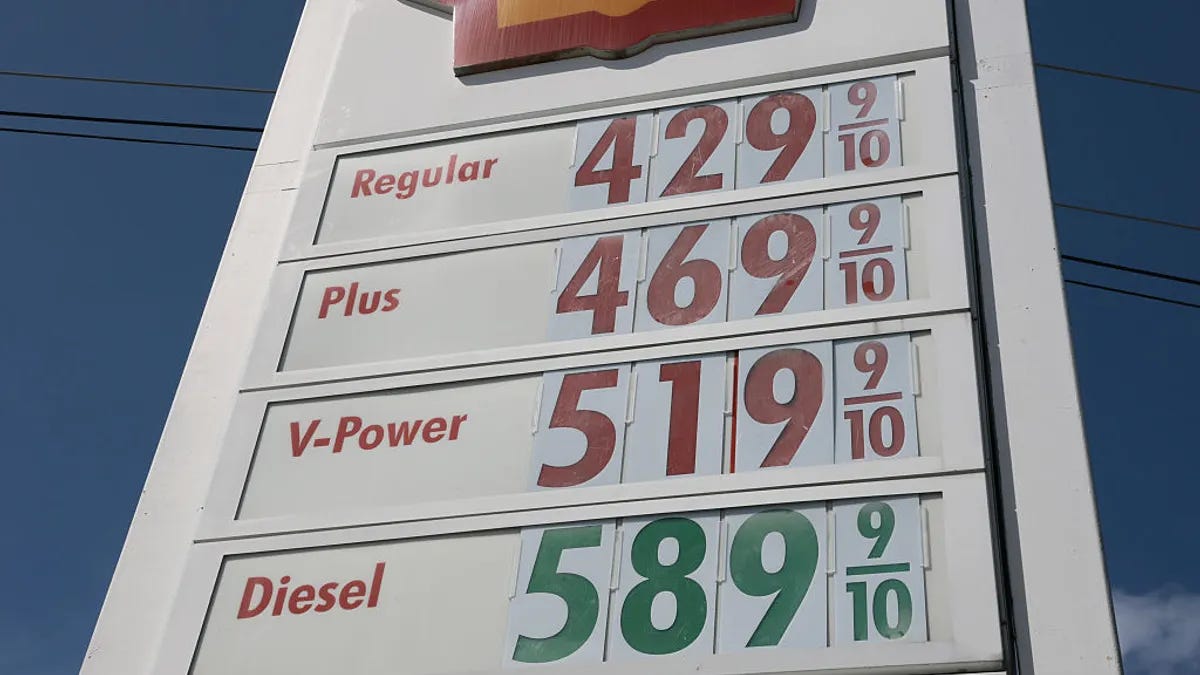
Diesel prices at the pump hit a record average of $6.50 a gallon last month, up nearly a dollar in a month, due to the ongoing war in the Middle East. Though most average drivers never buy it, everyone pays for diesel in the price of freight, crops, and the equipment building America’s energy infrastructure. So with more than 10 million barrels a day of Persian Gulf output shut in, according to the International Energy Agency, the world is experiencing the largest supply disruption to date. A White House facing midterm elections is right to feel the pain.
But an export ban is the wrong answer, and a revealing one, because it’s what petrostates do.
In June, Russia’s deputy prime minister said Moscow was weighing a total diesel export ban after already halting gasoline and jet fuel exports. Petrostates treat fuel as a domestic entitlement to be rationed at the border. Contrastingly, America has spent the past decade becoming the supplier the rest of the world plans around, or in other words, the opposite.
A ban wouldn’t even deliver cheaper fuel. Refiners that lose their export customers won’t sell the extra diesel at a loss on the home market; they’ll process less crude. And because gasoline, diesel and jet fuel come out of the same barrel, refining less to cut diesel means less gasoline too. That’s why Energy Secretary Wright warned that restricting diesel exports would raise gasoline prices almost immediately.
The research on America’s historical export ban points the same direction. From 1975 to 2015, the United States restricted crude oil exports. Studies by the Energy Information Administration and independent think tank Brookings concluded that removing the ban would leave gasoline prices unchanged or lower, because U.S. fuel prices follow international markets. Congress lifted the ban and consumers weren’t hurt. Walling off the domestic market doesn’t shield Americans from a global price, it just pulls the most reliable supplier off the world market and forces everyone else to bid harder for what’s left.
The damage wouldn’t stop at the water’s edge either. In addition to more than doubling exports to Europe over the last year, Mexico imports roughly 288,000 barrels of U.S. diesel a day, more than 40% of its supply, according to Mexico’s Secretariat of Energy. One refinery Mexico counts on sits on the Houston Ship Channel. The refinery, Deer Park, is owned outright by Mexican state oil company Pemex. A ban would trap Mexico’s own diesel in Texas.
That points to a bigger cost. America’s power in energy is built on trust. If you buy from us, you won’t be cut off. That idea underpins the long-term gas contracts Europe has signed since Russia invaded Ukraine and every argument Washington makes to allies about diversifying away from unreliable suppliers. Even a 90-day ban would make that promise less reliable and more conditional, and European leaders are already raising the alarm on this.
For Texas, the effects would be outsized. Texas holds about one third of the nation’s refining capacity, according to the Energy Information Administration. The Gulf Coast functions as basically the world’s backup refinery and according to the Federal Reserve Bank of Dallas, produces two-fifths of global supply. This week, West Texas crude sold for roughly $12 a barrel less than the international Brent benchmark, the widest gap since May. Texas refiners buy that cheaper crude, turn it into diesel, and sell it to a world short on fuel. That trade is why Gulf Coast refineries are running flat out, and it’s exactly what a ban would shut down. So while energy security might have once meant hoarding barrels, today it means being the reliable supplier others depend on.
There are better tools. Washington can release the one-million barrel Northeast Home Heating Oil Reserve ahead of winter to provide short-term relief to consumers. Target relief to the truckers and farmers hit hardest in by temporarily suspending the federal diesel tax and offering direct U.S. Department of Agriculture emergency aid. Press for a deal to end the war in Iran, which would do far more for prices than any border measure.
Over the long run, the most durable protection against diesel shocks is using less diesel. But for now, America, and the world, continue to run on it.
This war will end. When it does, buyers will remember who kept shipping. America’s reputation as a dependable supplier took a decade to build, so it should not be traded for 90 days of headlines.