
It may come as a relief that ERCOT has received three mostly reassuring report cards in the past month:
The three reports tell a consistent story of progress and continued growth. ERCOT had a strong operating year in 2025. The grid operator continued implementing major state policy priorities and avoided emergency conditions. Together, the reports provide a framework for how Texas can continue to maintain reliability without undermining the market signals needed to support long-term investment.
Demand is growing, but so is the resource mix
The good news is that demand growth has not yet translated into emergency conditions with the Texas Reliability Entity noting that ERCOT avoided energy emergency alerts for the second year in a row. ERCOT demand continues to rise, and the system also continues to add significant amounts of solar and battery storage. Those resources helped support summer peak conditions, manage evening ramping needs, and increase operating reserves.
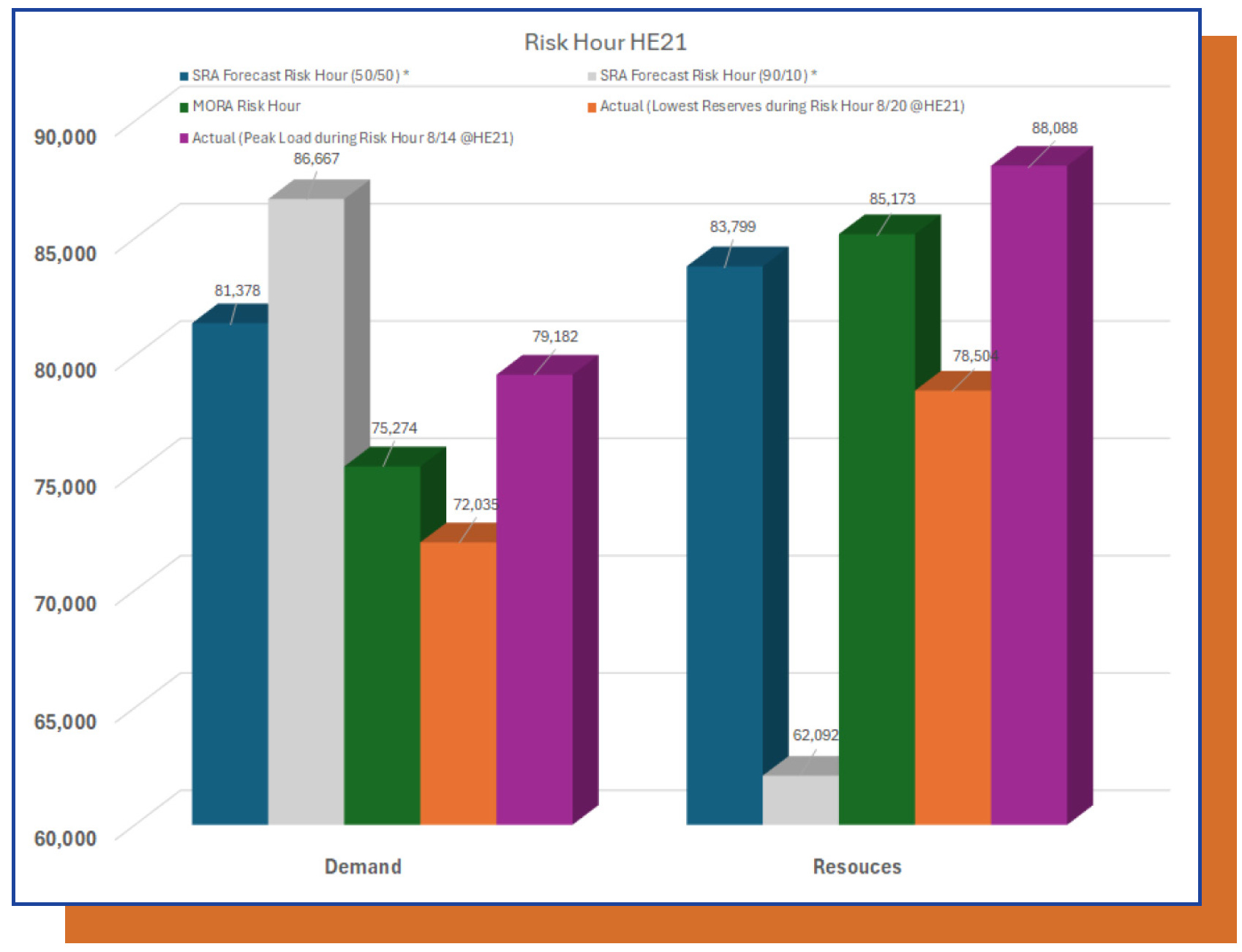
The figure below from the TRE assessment shows the highest risk hour on August 20 from 8 p.m. to 9 p.m., with actual demand at 79 gigawatts and available resources at 88 GW. (SRA: Summer Reliability Assessment, MORA: Monthly Outlook for Resource Adequacy)
TRE’s review also evaluates customer outages, generation and transmission outages, event causes, protection systems, human performance, situational awareness, physical security, and critical infrastructure interdependencies. TRE notes physical security issues such as substation intrusions, copper theft, and unusual reports of people showing up at generation sites claiming they had been hired or directed to perform work. It is a reminder that reliability is not only about market rules and planning models, but also about the protection of physical assets spread across a very large state.
ERCOT makes progress on state policy priorities

