
Reading and Podcast Picks is a collection of what we’ve been reading and listening to over the last week or so about energy topics.

In addition to these R&P Picks, paid subscribers receive access to the full archives, Grid Roundups, and select episodes of the Energy Capital Podcast. Please become a subscriber today.
All spring, the Texas energy conversation has been dominated by a regulatory-palooza of proceedings at the PUCT and ERCOT. When the dust clears, the mix of process changes and implementations should provide a foundation allowing the grid to grow — and determining who will pay for that growth.
In this report for The Center for Strategic and International Studies, Arushi Sharma Frank (who appeared on the Energy Capital Podcast in 2024) surveys the regulatory activity, connects the dots between disparate activities, and shows how important these processes will be:
… Texas is tackling everything at once. The Electric Reliability Council of Texas (ERCOT) market is solving for speed-to-power by surmounting transmission bottlenecks, phantom load growth, buying down residential rate increases, and more.
Last week, a single hearing of the Texas Senate Committee on Business and Commerce brought this into view. Public Utility Commission of Texas (PUCT) Chairman Thomas Gleeson and ERCOT CEO Pablo Vegas told the committee that they were managing 410 gigawatts (GW) of load applications, nearly five times the capacity of today’s ERCOT grid, and nearly 90 percent of them were data centers. In the face of potentially overwhelming demand, Texas will either become an example of success or failure in the United States’ approach to winning the AI race.
The Texas legislature and regulators have developed a suite of policies to manage this growth. Three stand out as particularly important:
Market-Based Reliability: The move toward a Dispatchable Reliability Reserve Service (DRRS) (mandated in H.B. 1500, codified in PURA § 39.159(d),(e)), proves that even in liberalized markets, long-duration reliability (like gas and long-duration batteries) requires a specific price signal to survive alongside zero-marginal-cost renewables and short-duration batteries.
The Denominator Effect: Texas is shifting the conversation from “How much will this cost ratepayers?” to “How much can we grow the load base to dilute system costs?” There is an emerging Texan answer to debate over who bears the fixed costs of grid upgrades, and how the grid is utilized (and utilized by what technologies) to spread out fixed costs.
The End of the “Doom Loop” and Flexible Connection: By ditching the traditional load study process for a “batching” approach, Texas is in a first-of-kind exercise to solve load interconnection with strict project maturity criteria, bankable energization timelines, and as-available service options for loads to receive power faster.
Renewable energy is a ‘second opportunity’ for some rural Texans | San Antonio Express-News
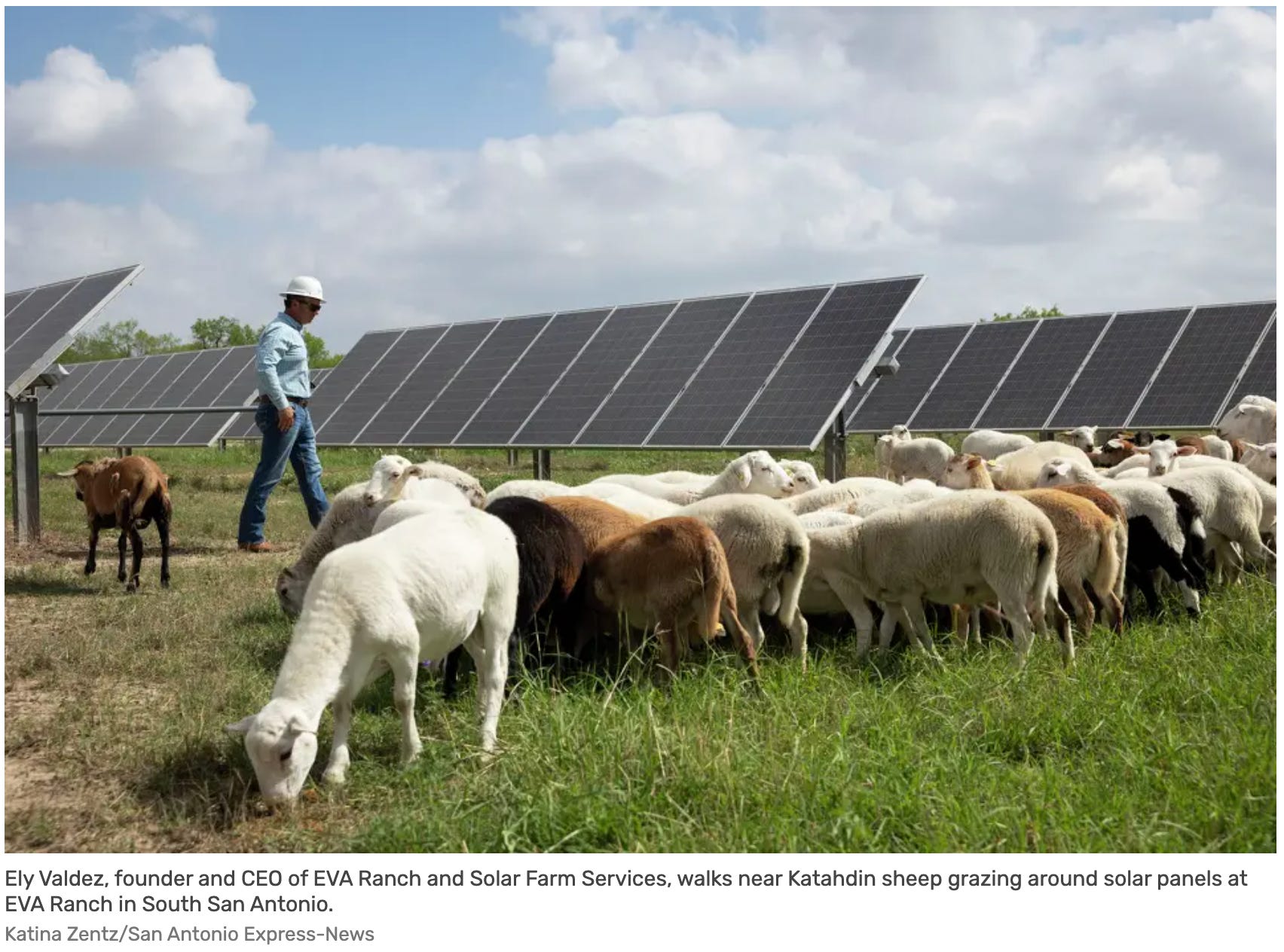
In a Texas Senate committee hearing this month, state Sen. Lois Kolkhorst — who represents a largely rural constituency — flatly declared, “Nobody wants the renewables anyway in their districts.” But this recent San Antonio Express-News story shows how important renewables projects can be for rural Texans trying to hold onto their land.
