
Texas is one of the fastest-growing data center markets in the world, and the state’s grid planners, lawmakers, and ratepayers are all starting to feel it.
This spring, a series of ERCOT reports, legislative hearings, and new policy initiatives have put three questions on the table: How much new electricity demand is actually coming? Who foots the bill for the infrastructure to serve it? And is the Texas electricity market built to handle what comes next for Texans and developers?
These Grid Roundups, along with the full archives, select episodes of the Energy Capital Podcast (including this one on how batteries are reshaping the grid with Fluence VP Suzanne Leta), Reading and Podcast Picks, and more – are for paid subscribers.
Load forecast variability is hard to ignore
ERCOT’s preliminary 2026 Long-Term Load Forecast got big headlines this month, showing load reaching an impossible level of 368 gigawatts, more than four times the grid’s current all-time demand record, by 2032. Energy analyst Travis Kavulla rightly told Bloomberg that the forecast “can’t actually happen.”
This week, ERCOT CEO Pablo Vegas offered a more realistic forecast in his presentation to the grid manager’s board: 111 gigawatts by 2032.
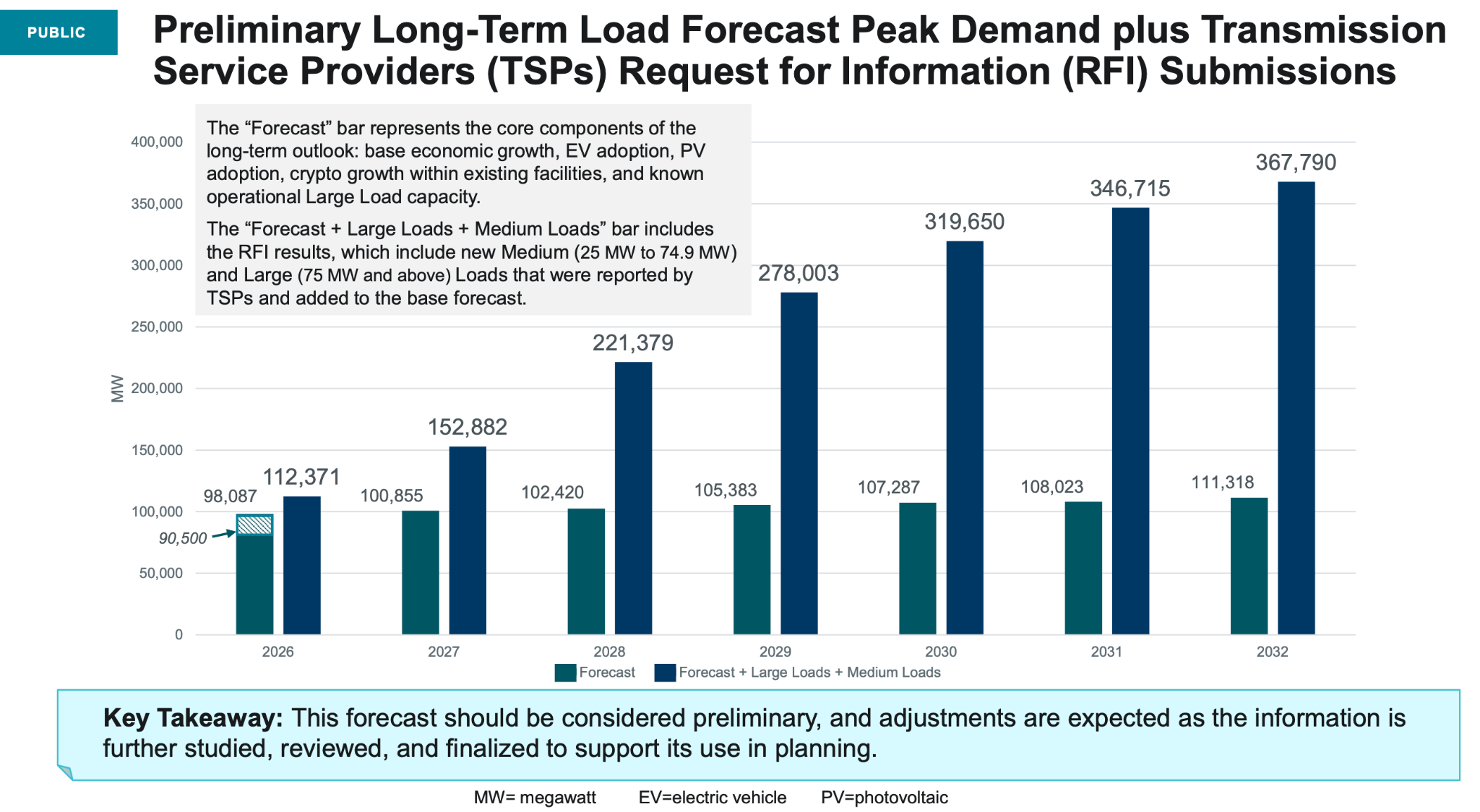
That’s still an enormous amount of load growth, and the driver behind it is no mystery.
