
Reading and Podcast Picks is a collection of what we’ve been reading and listening to over the last week or so about energy topics.

In addition to these R&P Picks, paid subscribers receive access to the full archives, Grid Roundups, and select episodes of the Energy Capital Podcast. Please subscribe today.
Behind the Backlash: Understanding Opposition to Data Centers | Milltown Partners
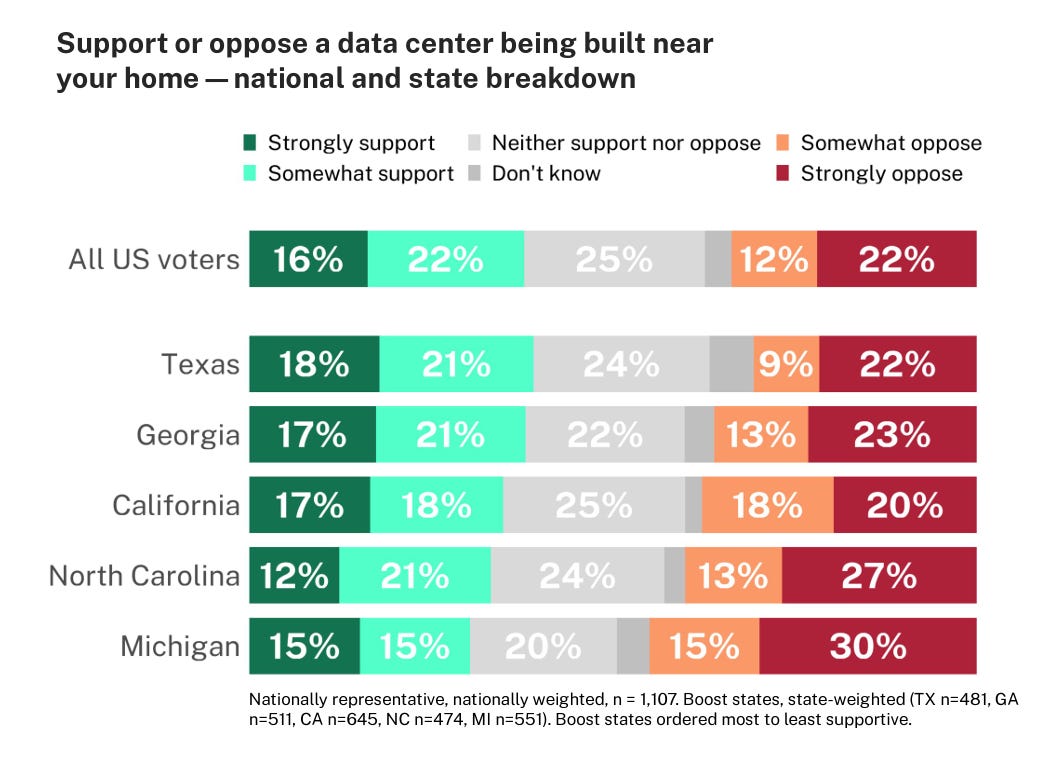
Milltown Partners surveyed more than 6,000 registered voters about data centers and got some surprising results. The chart below is from the report.
Opposition to data centers is more than a political phenomenon. It’s driven by anti-tech sentiment more than NIMBYism or environmentalism and underpinned by populism on both sides of the political divide.
The permit is not the license | The Edge
Harvard professor George Serafeim uses the example of Blackstone walking away from QTS data center development to make a crucial point. Just because a project has local permits to build doesn’t mean it has the social license from the community to move forward. Neighbors of the QTS project fought the development and won legal decisions that made the project untenable.
Mining, oil, and gas already paid tuition on this lesson across decades of blocked projects and burned capital. Tech and finance are now enrolling in the same course, and QTS just paid the first installment. The permit was never the license that mattered.
Attitudes toward data centers in Texas are shifting | Dallas Morning News
The Dallas Morning News editorial board throws its support behind Gov. Greg Abbott’s position on firm data center regulations.
Abbott is right to push for a framework that reduces the impact data centers have on their neighbors because as Texas attracts more data center development, especially in rural areas, the state is confronting a new reality.
