
While Texas depends more than ever on renewable energy to keep the lights on, the U.S. Department of the Interior (DOI) is changing how renewable energy projects are reviewed and approved.
As the New York Times has reported, new Interior directives are creating a regulatory environment with slower solar and storage project reviews, new approval processes, and unfamiliar evaluative standards that did not exist a year ago. Those changes extend beyond federal land, wrapping in some projects on private property as well.
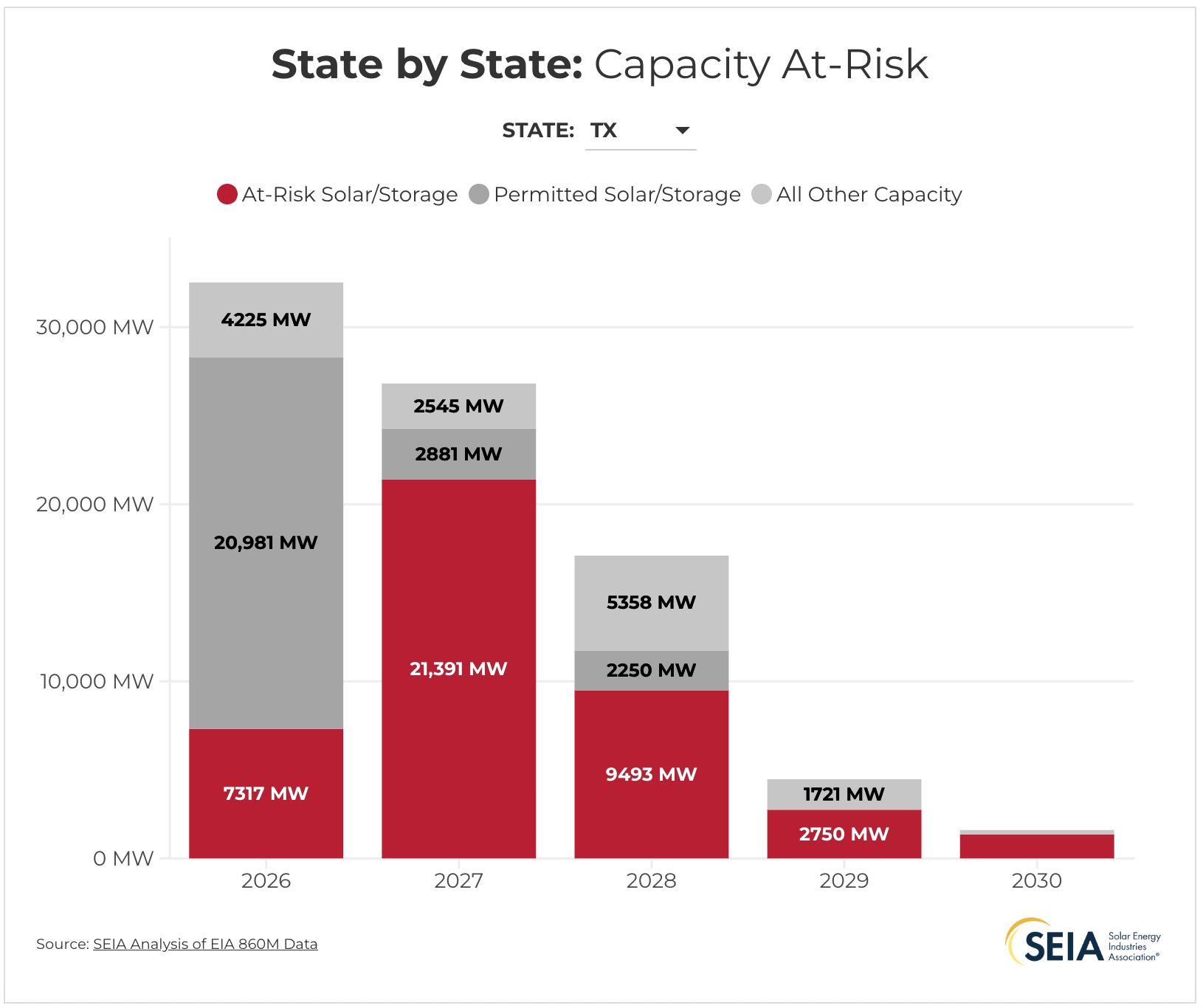
As a result, tens of thousands of megawatts of planned energy development in Texas could face delays.
The changes come as Texas’s nation-leading renewable resources grow increasingly essential for the state’s power grid. On some afternoons, affordable solar power supplies about half the electricity in ERCOT, which is especially important in the heat of the summer as temperatures and air conditioners crank up. Battery capacity, which nearly doubled last year, provides an instant, reliable power boost, especially as the sun sets but demand remains high. And wind power delivers vital low-cost energy to counter increases to Texans’ power bills.
These resources have helped ERCOT avoid emergency conservation alerts for nearly three years, even as peak load approached new records.
But under the new federal rules, the continued growth of renewable resources is in jeopardy – even in Texas.
The Solar Energy Industries Association reports that Texas accounts for nearly 40 percent of all solar and storage capacity that’s now at risk nationally due to the regulations. More than 28,000 megawatts of planned solar and battery projects could be blocked this year and next.
Here are five important changes the Trump administration has made over the past 14 months that threaten to slow development of renewable energy in Texas:

